Current Initiative
Windsor Essex Bike Community - Libro Centre Mountain Bike Skills Park
Windsor Essex Bike Community (WEBC) is a registered nonprofit and volunteer organization committed to using cycling and the power of community to create meaningful & positive impacts for residents all over Windsor-Essex. WEBC promotes all types of cycling in Essex County, while providing a platform to pursue mutually beneficial partnerships between the riding community and local government.
WEBC’s key functions include:
Advocating for the development of new cycling-specific trails in across Essex County.
Promoting all aspects of cycling to increase community involvement, tourism, and economic growth within the region.
Uniting the local riding community to create mutually beneficial partnerships between riders and local government.
Windsor Essex Bike Community (WEBC) is a volunteer-driven nonprofit organization which is deeply woven into the fabric of Amherstburg’s recreational and youth development landscape. Since 2022, their mission has been to bring people together through cycling — uniting riders of all ages and backgrounds, promoting safe and welcoming outdoor spaces, and building community infrastructure that inspires healthier, happier, and more connected lives.
Their relationship with Amherstburg began with a vision to transform unused public land into a meaningful community asset. Through Phases 1, 2, and 3 of the Libro Centre Trails Project, WEBC mobilized volunteers, donors, and community supporters to build more than 7 km of sanctioned mountain bike trails. Over 5,000 hours of volunteer labour and more than $200,000 in community raised funds were invested, all delivered without financial burden to the Town of Amherstburg.
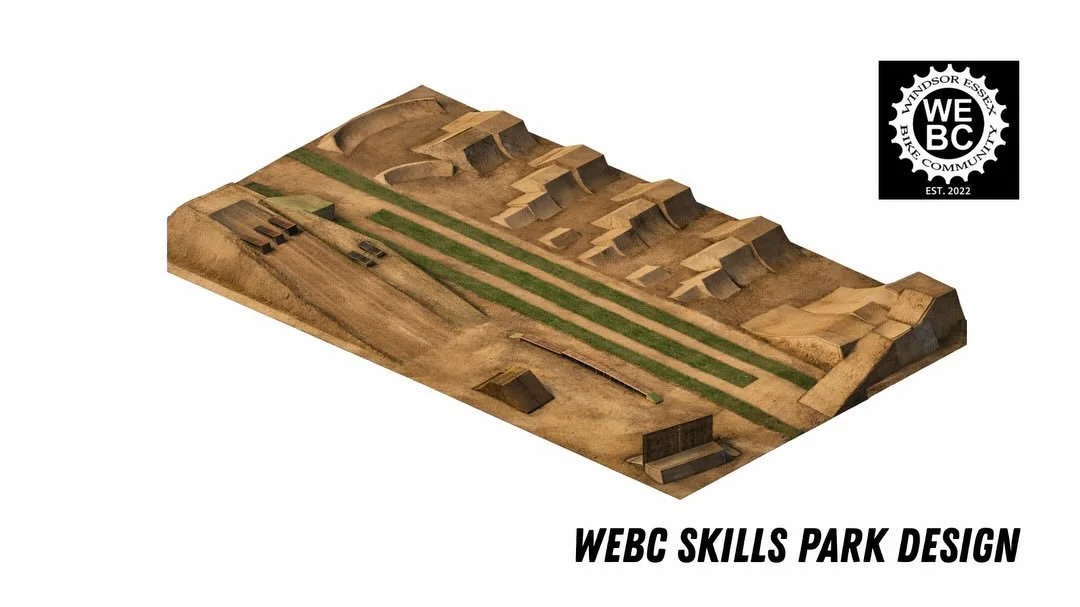
WEBC is determined to continue building a premier, public trail network at the Libro Centre in Amherstburg. Phases 1, 2 &3 of the project were a massive success, and now they are fundraising for Phase 4 of the project - a skills development park adjacent to the trails - to be completed in 2026.
Over the past three seasons, trail usage at the Libro Centre has grown far beyond what anyone expected. The trail system now sees an estimated 5,000–6,000 users each season. Families visit together, teenagers ride after school, and adults use the trails for exercise, recreation, and stress relief. This growing participation reflects a meaningful shift toward active outdoor living in Amherstburg and demonstrates strong demand for accessible recreational spaces that support community well being.
However, the popularity of the trails has also revealed a gap. New riders currently learn directly on the main trail network, where terrain can feel intimidating, particularly for children and first time participants. The Skills Park addresses this need by creating a safe, structured learning environment where riders can build confidence before entering more challenging terrain. This improves safety, increases participation, and supports long term engagement in healthy activity, aligning directly with ACF’s goal of fostering healthier residents. The park also supports youth development and inclusion. WEBC youth programs and school groups will have a dedicated training environment that encourages skill building, mentorship, and positive social connection. Because the facility is free and open to all ages and income levels, it removes financial barriers to recreation and ensures more residents can participate, supporting ACF’s commitment to inclusive community opportunities.
The WEBC Libro Centre Skills Park is designed to be a premier and entirely free outdoor recreation space that empowers people to develop confidence, fitness, and technical mountain bike skills in a safe and structured environment. Built beside the existing mountain bike trail network at the Libro Centre, the Skills Park will offer three progressively designed riding areas: beginner, intermediate, and advanced, each intentionally designed to teach essential trail skills through repetition, progression, and positive challenge while supporting WEBC youth programming and school partnerships which already operate at the site.
The Skills Park will include purpose-built features to closely mimic the real world terrain riders encounter on the Libro Centre’s mountain bike trails, allowing users to learn skills in a controlled setting before applying them to the main network. Clear signage will guide riders toward features suited to their skill level, helping them build confidence gradually and safely. This structured learning environment protects beginners from entering more advanced terrain before they are ready, while still offering excitement, challenge, and skill development opportunities for intermediate and advanced riders looking to progress. By creating a designated learning space, the park will also reduce overcrowding during youth sessions and improve coaching effectiveness and participant safety.
A major strength of this project is WEBC’s ability to both design and fully fund the Skills Park, drawing on the same proven model used for Phases 1–3 of the recently completed WEBC Libro Centre mountain bike trail system. WEBC will plan, engineer, and finance the project entirely through community donations, grants, and volunteer led labour. This will ensure Amherstburg receives a premiere level recreational asset without requiring town funding, while strengthening long term stewardship and community ownership of the space.
WEBC will continue to utilize its existing Land Stewardship Agreement with the Town of Amherstburg to construct, manage, and maintain the Skills Park long term, just as we do with the current WEBC Libro Centre mountain bike trails. This provides extraordinary value to the community as Amherstburg gains a new, high quality recreational venue that enhances resident well being, youth development, and tourism, all at zero cost to taxpayers.
In essence, the Skills Park is the missing link to complete the Libro Centre cycling ecosystem. It provides the training ground riders need before venturing onto the larger trail network, ensuring that safety, skill progression, community engagement, and rider enjoyment are all maximized, while also expanding capacity for programs and creating a welcoming first experience for new riders who may otherwise feel intimidated starting directly on full trails.